01
Early Recovery
Manage pain and swelling, restore knee movement and gradually regain weight-bearing.
Meniscus injuries do not always require surgery. We guide you through evidence-based conservative care or post-surgical recovery, focusing on joint decompression, rotational stability and progressive loading.
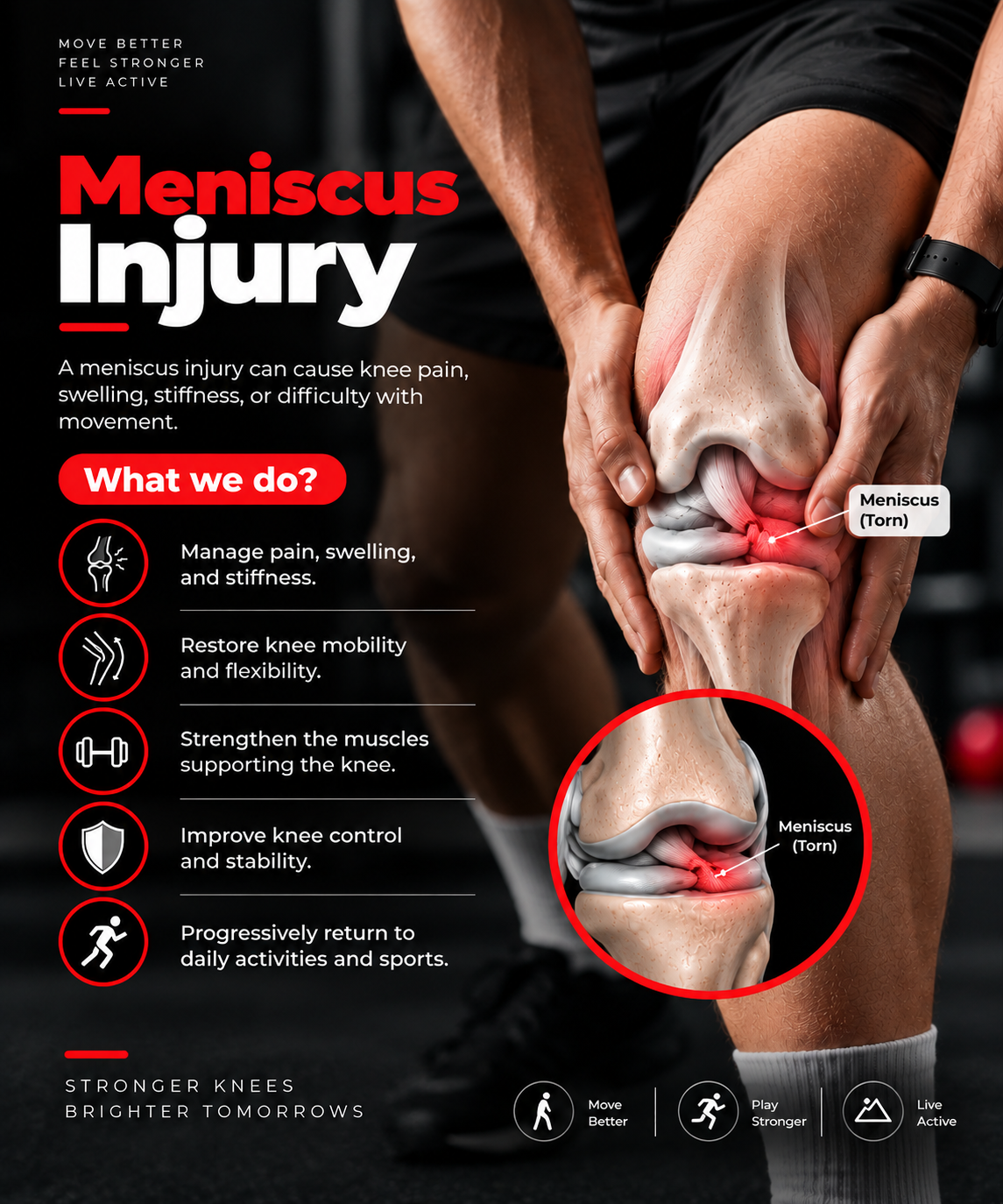
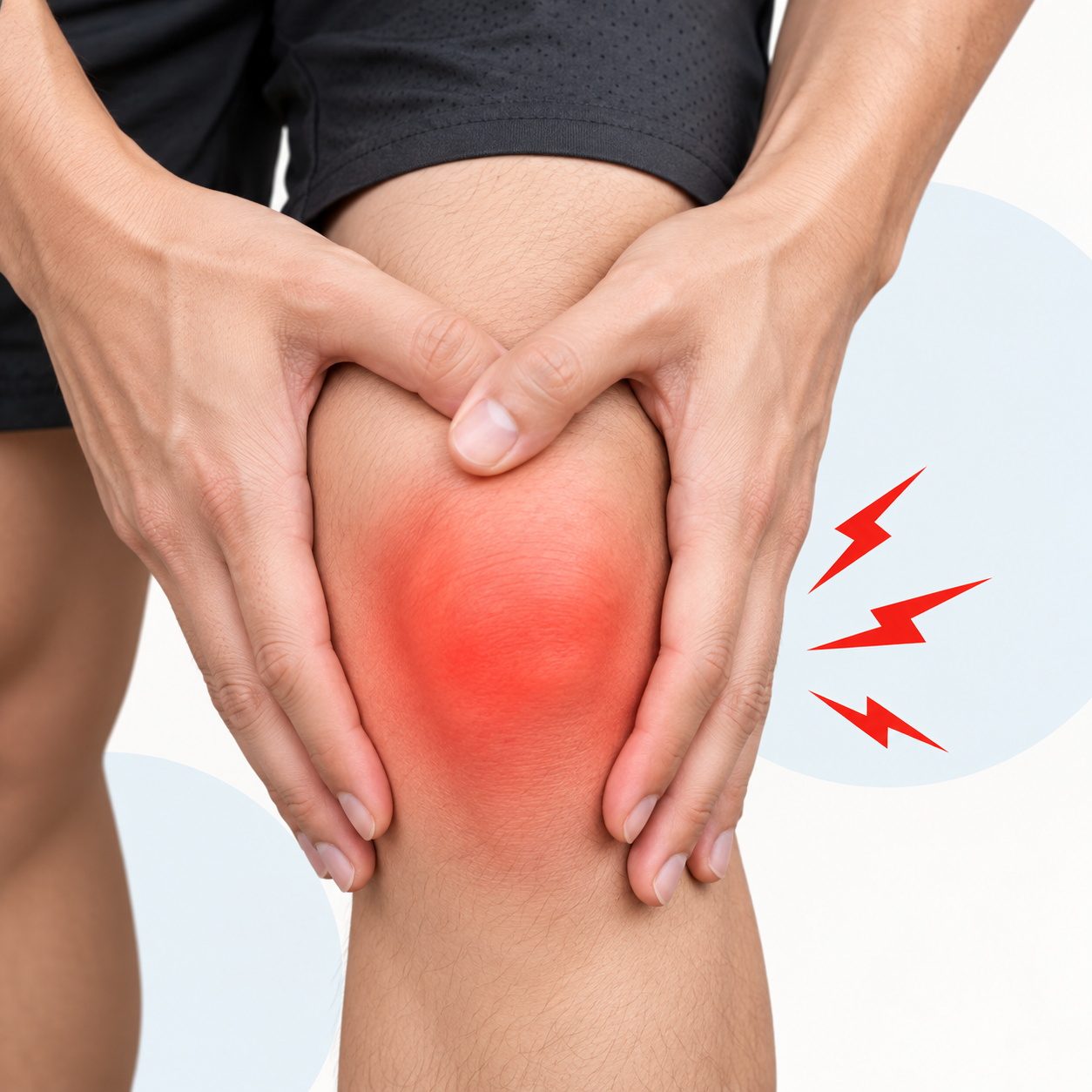
Our approach calms the joint and progressively restores deep flexion, pivoting, and ground impact capacity.
A phased progression from settling symptoms to returning to sport — each stage builds on the last.
Manage pain and swelling, restore knee movement and gradually regain weight-bearing.
Restore range of motion and activate the quadriceps, hamstrings and glutes.
Progressive strengthening, balance and movement control to improve knee function.
Gradually introduce squats, lunges, running and other functional movements based on recovery.
Progress to agility, change of direction and sport-specific drills before returning to full activity.
Meniscus symptoms rarely have one cause. We look at movement, load and recovery together to find what is driving your symptoms.
A sudden twist, pivot or awkward landing with the foot planted can tear the meniscus or aggravate an existing injury.
Repeated deep squatting, kneeling or lifting with the knee fully bent increases compressive load on the meniscus.
Degenerative changes, joint stiffness or weak quadriceps, hamstrings and glutes reduce how well the knee absorbs load.
“The treatment approach is structured, well-explained, and focused on long-term recovery. Their attention to detail, clear communication, and consistent support have played a significant role in my recovery and improvement in strength and mobility.”